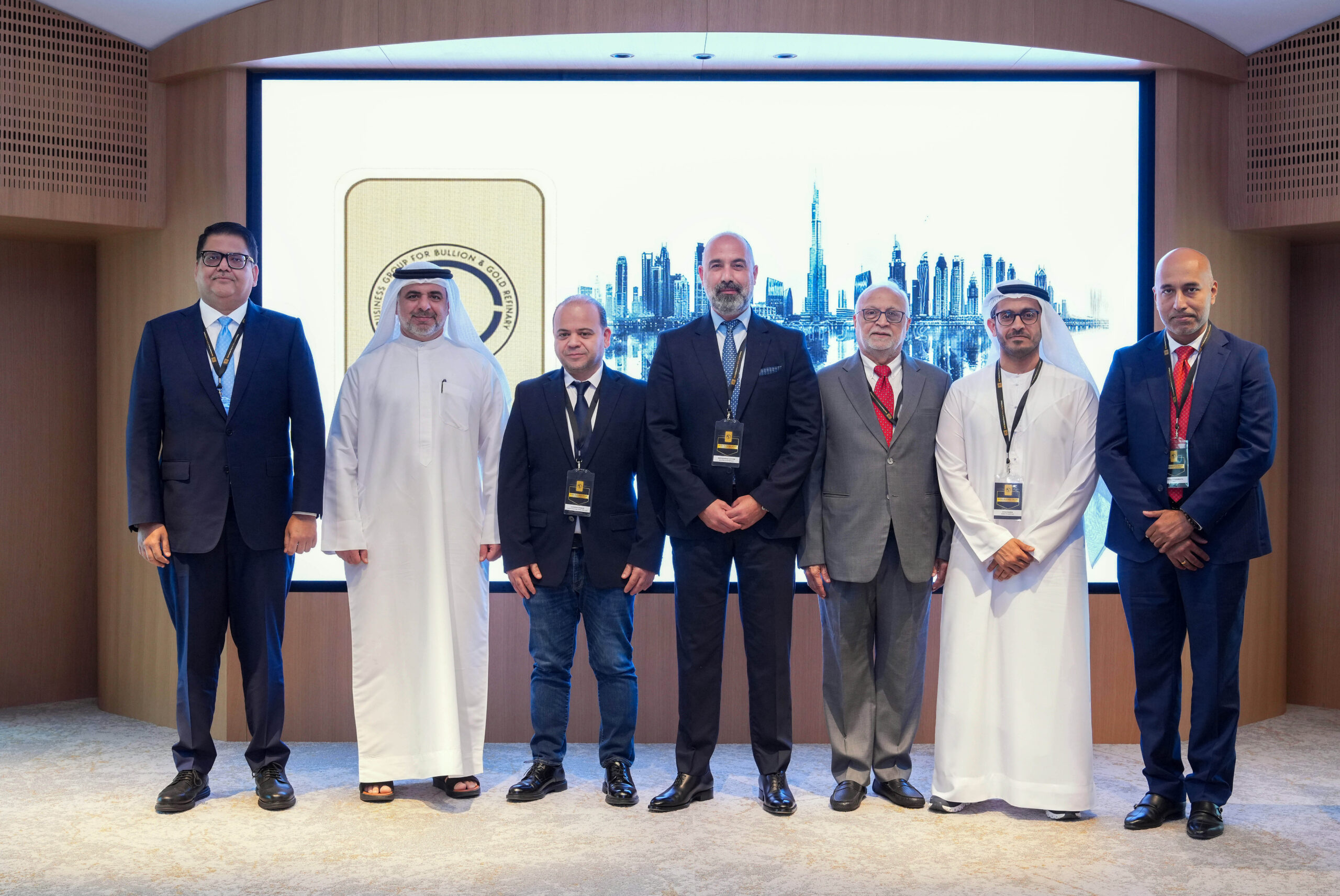
The launch of the Dubai Business Group for Bullion and Gold Refinery marks a turning point for a sector that has long punched above its weight without a unified voice
The UAE has built itself into one of the world’s most significant precious metals markets — handling an estimated $160 billion in gold imports and exports annually, and steadily closing in on Sheikh Mohammed’s target of routing 50 percent of the global gold trade through the emirate. What it has never had, until now, is an organised industry body to represent the people making that happen.
That changed with the launch of the Dubai Business Group for Bullion and Gold Refinery, a new trade body established under Dubai Chamber of Commerce to give the bullion and refining sector something it has quietly lacked: a voice.
“There’s a Dubai jewelry group that’s had a voice, and the banks have a voice,” said Jeffrey Rhodes, a veteran precious metals consultant and CEO of Goldstrom Advisory. “But the bullion traders and refineries have never really had a voice and this will be a massive difference.”
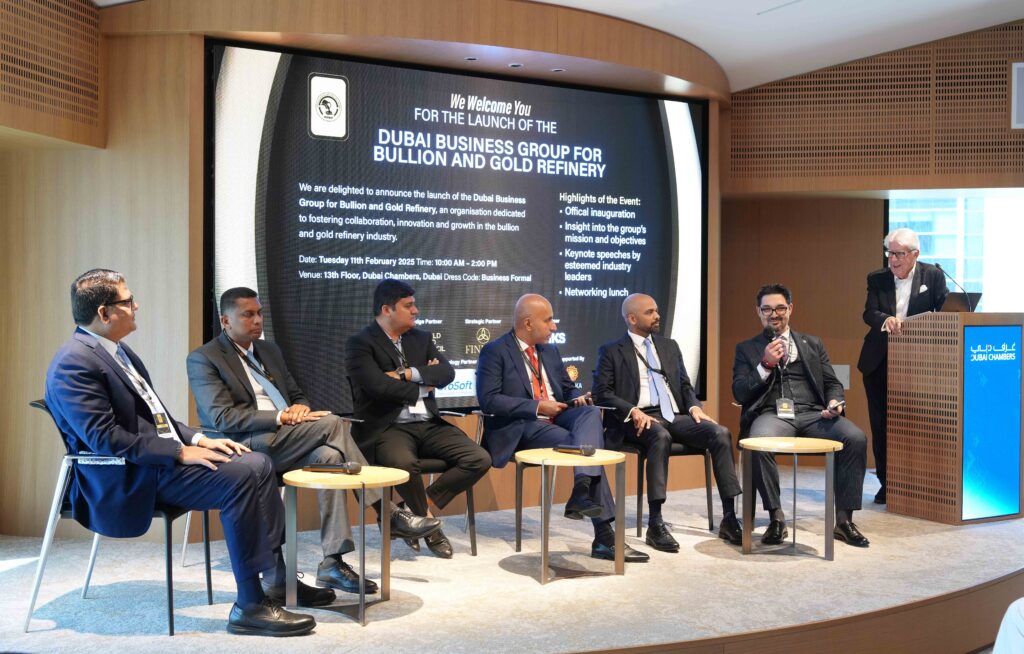
The gap Rhodes describes is not merely symbolic. One of the most pressing practical challenges facing bullion businesses in the UAE is access to basic banking services- a problem that compliance requirements and anti-money laundering regulations have made increasingly difficult despite the sector’s scale and legitimacy. Rhodes sees the new group as directly positioned to address it. A body that can offer training programmes and compliance certification, he argued, would give banks the assurance they need to open accounts for precious metals businesses- removing what he called “the biggest challenge in the gold sector today.”
For Mohammad Ayyob, the group’s chairman, the ambition extends beyond solving immediate industry problems. “This is something that is needed in our industry: to bring all the industry under one roof, to gather all their interests, to streamline it, to be their voice,” he said at the launch. “This is just the beginning.”
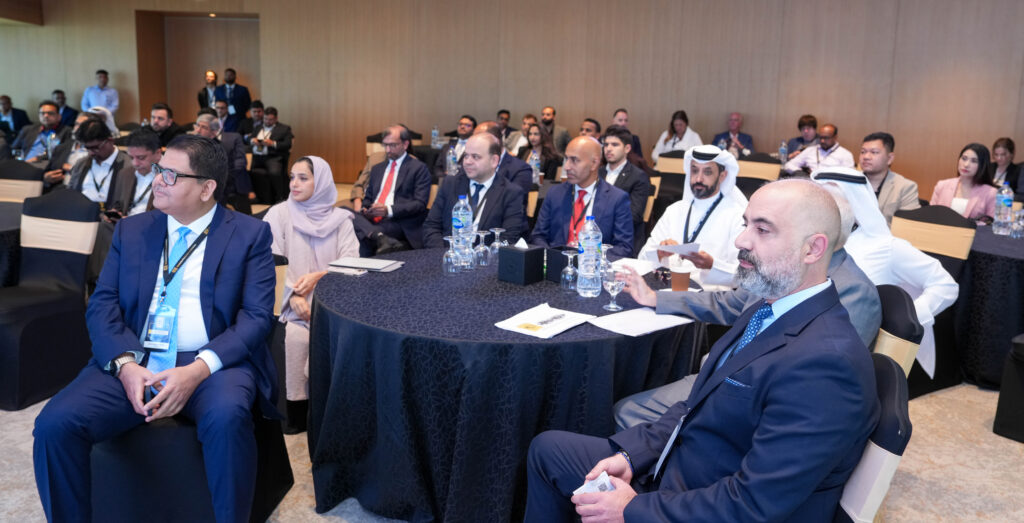
The timing is significant. The UAE’s rise as a global gold hub has accelerated in recent years, driven partly by geopolitical and financial shifts elsewhere. Keith Weiner, CEO of Monetary Metals, pointed to the dollar’s weakening position and the uncertainty created by US tariff policy as forces pushing gold market activity eastward. “The whole trend is [that] things are moving here,” he said. “The UAE is kind of the next Switzerland.”
That comparison carries weight. Jeffrey Rhodes drew a longer historical line, noting that the UAE’s role as a trading entrepot stretches back centuries — and that its current position, connecting the Middle East and Indian subcontinent with global markets, mirrors the function London once served linking Europe and North America. The infrastructure, the geography, and the regulatory environment are already in place. What the DBRG is designed to provide is the institutional layer that turns a collection of individual businesses into a coherent industry.
Sudheesh Nambiath, a precious metals expert and founding member, put the opportunity in precise terms. With UAE currently handling around 15 percent of global gold trade against a target of 50 percent, the gap represents not a ceiling but an agenda. “Together we are sitting on a big opportunity that still remains untapped,” he said. “That’s where the DBRG comes in.”
Anshuman Sharma, the group’s General Secretary and Head of StoneX, described the launch as a consolidation moment for an industry that has grown rapidly but informally. “All we needed is to consolidate ourselves so that we can put our requests forward in a proper manner,” he said. “This is a very good platform.”
Whether the DBRG can deliver on that promise will depend on its ability to move from launch rhetoric to tangible industry impact: on compliance frameworks, banking access, and the kind of sustained advocacy that changes how regulators and financial institutions engage with the sector. The founding members are clear-eyed about the scale of that task. They are equally clear that the alternative, continuing without a unified voice in a market of this size, is no longer an option.